
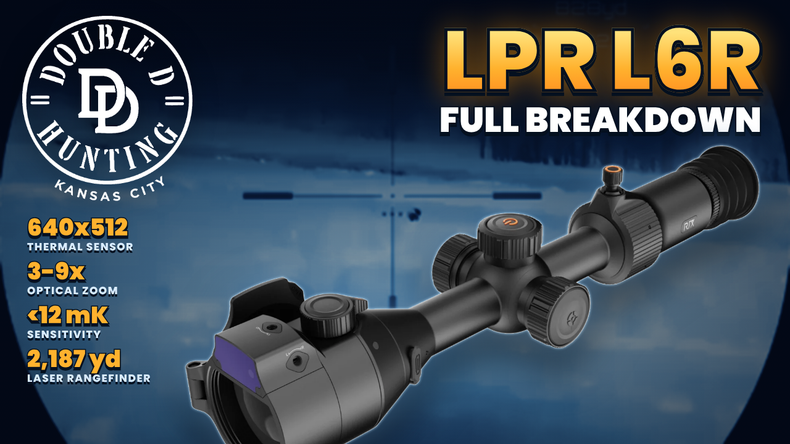

RIX LPR L6R Hands-On Review
The RIX LPR L6R is a 640x512 thermal rifle scope with 3x to 9x of real optical zoom, a 2,187 yard rangefinder and a ballistic calculator that hands you the holdover. We took it out of the box and put it through its paces. It is $3,999 at Double D.
The Short Version
If you hunt hogs or coyotes at night and want one scope that finds the animal, ranges it and tells you where to hold, the LPR L6R does all of it from the rifle. The optical zoom is the headline. Most thermal scopes crop the sensor to magnify, and the picture falls apart right when you need detail. This one moves glass.
At 2.01 lb without the battery, it is also light enough that you will not resent it on a walk-in stand.
Watch the Hands-On Review
Drake walks through the box contents, the controls and the features that matter in the field. Everything below follows the video, with the specs checked against RIX's published numbers.
One correction to the video: the on-screen thermal sensitivity card around 2:40 reads under 20 mK. That is the LEAP L6R figure. The LPR L6R is rated under 12 mK, which is the number Drake says out loud.
What Comes in the Box
The packaging is a cut above, and everything lives in a semi-hard zip-up case that holds the scope and the accessories together. Here is what you get:
- The LPR L6R scope on a one-piece 30mm Picatinny mount, plus the hex key
- Two 21700 batteries, a battery charger and a USB Type-C cable
- An 18650 adapter sleeve, in case that is what your other gear already runs on
- A fireproof bag for the lithium batteries
- Ten thermal targets for sighting in, day or night
- A slotted screwdriver for adjusting the laser rangefinder
- A lens cloth and protective scope stickers
The fireproof bag is a small thing that tells you somebody at RIX thought about where these batteries ride: in a truck console, a pack or a blind bag on a hot afternoon. The thermal targets matter more than they look. Thermal scopes cannot see a paper target, so a heat-reflective target is the only clean way to zero without improvising.
Controls You Can Run With Gloves On
The first thing you notice out of the box is the size of the knobs and buttons. They are oversized on purpose. In January, with gloves on and your fingers half numb, you can still find the controls by feel and make an adjustment without taking your eye off the target.
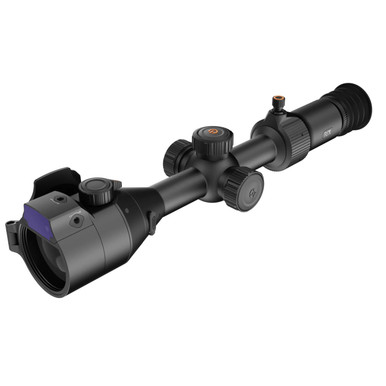
The optical zoom ring has a throw lever on it. It turns smoothly with no gritty spots, and the lever lets you run magnification with one finger instead of pinching a ring. Everything on this scope operates cleanly.
The housing is magnesium alloy, and the scope weighs 2.01 lb without the battery. That is light for a 50mm thermal with a built-in rangefinder, and it keeps the rifle balanced instead of top heavy.
The 640 Sensor and Under 12 mK
Under the hood is a 640x512 thermal sensor behind a 50mm F0.9 lens, refreshing at 50 Hz. The number worth paying attention to is the thermal sensitivity, rated under 12 mK NETD. Lower is better. It is how small a temperature difference the sensor can tell apart.
In the field that shows up two ways. On a humid night, or in fog, rain or snow, moisture in the air flattens thermal contrast, and a more sensitive sensor holds onto the outline of the animal longer. The bigger difference shows up in summer.
Say you are hunting hogs on a 100 degree afternoon and the hog's body is about the same temperature as the air. A lot of thermals turn that into a grey smudge. With a sensor this sensitive you can still pick out the temperature difference in the hair, which is often the difference between seeing the hog and walking past it.
For daylight use specifically, we wrote up using a thermal scope during the day.
Optical Zoom on a Thermal Scope
This is the feature that sets the LPR L6R apart. Most thermal scopes on the market only have digital zoom, which works like zooming in on your television: the image gets blocky and clunky the further you push it, because you are enlarging fewer and fewer pixels.
The LPR L6R has a lens behind the screen that physically zooms. You get 3x to 9x of optical magnification with the whole 640x512 sensor still doing the work, then 1x to 4x of digital zoom on top of that when you want to get even closer.
The practical result is that you can scan wide at 3x, find heat, and roll to 9x to identify the animal without the picture breaking up. That is a sow versus a boar, or a coyote versus somebody's dog, decided at the rifle.
Rangefinder and Built-In Ballistics
The built-in laser rangefinder is rated to 2,187 yards with ±1.09 yard accuracy, in single or continuous mode. New on this model, the laser's aiming point is adjustable. The included screwdriver moves it left, right, up and down so the laser lands exactly where your reticle is pointed, and the change shows up on your screen.
The ballistic calculator is where it pays for itself. Say your rifle is zeroed at 100 yards and a coyote hangs up at 440. You range it, and the scope drops a holdover point on your reticle based on the ballistic data you entered. Put that point on the coyote and shoot. No dope card, no mental math in the dark.
Onboard sensors read temperature, humidity and air pressure and feed them into the calculation, and you can store five zeroing profiles for different rifles or loads.
If you are shopping this category broadly, our guide to thermal scopes with a rangefinder lays out the options.
Screen, Storage and Battery Life
The screen is a 1.03 inch AMOLED at 2560x2560. The blacks are deep and the whites are bright, yet looking through it does not feel harsh the way some high-contrast displays do. Targets pop and it is easier on your eye during a long sit.
There is 64 GB of built-in storage for recording your hunts, which works out to hours upon hours of footage. RIX also includes recoil-activated video, so the scope starts recording on the shot.
Battery life is about 5.5 hours per battery at 72°F, and two come in the box, so you have roughly 11 hours of runtime before you need a charger. That covers a full night. Powering down between stands stretches it further, and the USB-C port will run the scope off a 5V power bank if you settle into a blind for the long haul. Cold weather shortens any lithium battery, so keep the spare in an inside pocket.
Streaming to the RIX+ App
The LPR L6R streams live over Wi-Fi to the RIX+ app on your phone or tablet, iOS or Android. Hand the phone to your hunting buddy and they see exactly what you see.
That changes the hunt for anybody sitting next to you. A kid who would otherwise be staring into the dark gets to watch the hogs come in, and a second set of eyes can call the shot from the screen.
RIX LPR L6R Specs
Specifications from RIX, as listed on our product page.
| Spec | LPR L6R |
|---|---|
| Sensor | 640x512 VOx uncooled, 12 µm |
| Thermal sensitivity (NETD) | Under 12 mK |
| Refresh rate | 50 Hz |
| Objective lens | 50 mm, F0.9 |
| Optical zoom | 3x to 9x continuous |
| Digital zoom | 1x to 4x |
| Field of view | 8.8° x 7.0° (46.1 x 36.9 ft at 100 yd) |
| Detection range | 2,843 yd |
| Display | 1.03 in AMOLED, 2560x2560 |
| Laser rangefinder | 2,187 yd max, ±1.09 yd, adjustable to the reticle |
| Ballistic calculator | Yes, 5 zeroing profiles, onboard temperature, humidity and pressure sensors |
| Built-in memory | 64 GB |
| Wi-Fi | Yes, RIX+ app for iOS and Android |
| Battery | Removable 21700 (18650 with included sleeve), 5.5 hours at 72°F |
| External power | 5V via USB Type-C |
| Tube diameter | 30 mm |
| Recoil rating | 1,000 g at 0.3 ms |
| Weather rating | IP67 |
| Operating temperature | -4°F to 122°F |
| Weight (without battery) | 2.01 lb |
| Warranty | 5 years from RIX |
LPR L6R vs LEAP L6R
The RIX LEAP L6R is the scope most people cross-shop, and it is still a strong 640. The LPR is the newer design and costs $100 more.
| LPR L6R | LEAP L6R | |
|---|---|---|
| Sensor | 640x512 | 640x480 |
| NETD | Under 12 mK | Under 20 mK |
| Optical zoom | 3x to 9x | 2.8x to 8.4x |
| Rangefinder | 2,187 yd, adjustable | 1,312 yd |
| Built-in memory | 64 GB | 32 GB |
| Price at Double D | $3,999.00 | $3,899.00 |
For a hundred dollars you get the more sensitive sensor, a rangefinder with 875 more yards of reach and a laser you can align to your reticle. To compare every scope at this resolution side by side, browse our 640 thermal scopes, or the whole RIX thermal lineup.
Who Should Buy the LPR L6R
Buy it if you hunt hogs or predators at night, shoot past your zero often enough that holdover matters, and want to identify an animal at range before you put the crosshair on it. The optical zoom and the ballistic holdover are the two features you will use on every hunt.
If your shots stay inside 150 yards and you mostly need to find heat in thick cover, a lighter fixed-magnification thermal will do the job for less money. Optical zoom earns its keep at distance.
About the reviewer. Drake Adams is a co-owner of Double D Hunting with more than ten years in the hunting industry, including eight years in sales at Athlon Optics. He picks the optics we carry.
Frequently Asked Questions
RIX LPR L6R Thermal Scope, $3,999.00
640x512, 3-9x optical zoom, 2,187 yd rangefinder, built-in ballistics.