
No Monthly FeesUpdated September 29, 2026
TL;DR7 min read
A non cellular trail camera writes to an SD card instead of your phone, so there is no data plan and no monthly bill. Best overall is the Spypoint Force-Pro-S 2.0 at $149.99, which charges itself from a built-in solar panel. Best on a budget is the Stealth Cam GMAX32 at $78.99, cheap enough to buy two and cover more ground.
Cell cameras get all the attention right now, and they earn it on ground you cannot check often. But plenty of hunters are still hanging SD card cameras on purpose, and not only because they are cheaper up front. No plan to activate, no signal to chase in a river bottom, no notification bill arriving every month of the year. Here is what we stock, what the specs actually mean on a tree, and how to pick between them.
The recurring cost
A cell plan is charged per camera, per month, for as long as it hangs. Six cameras at ten dollars a month is $720 a year, every year. An SD card camera charges you once and never again.
Where cell still wins
Leases hours from home, security sets, and any spot where walking in to pull a card would burn the hunt. If that is you, read the cellular guide instead.
Every non cellular camera we stock
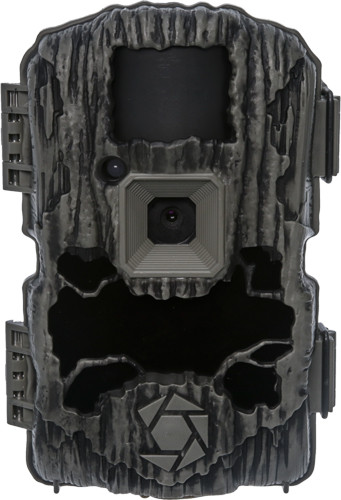
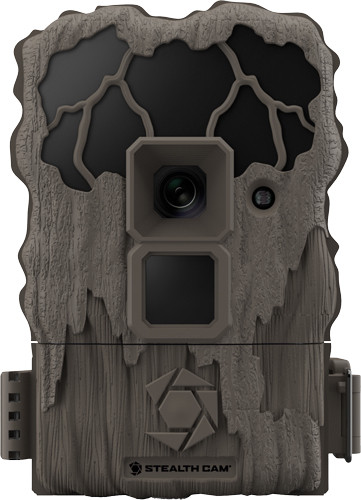
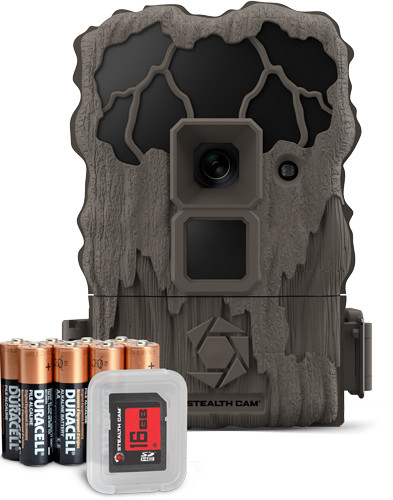
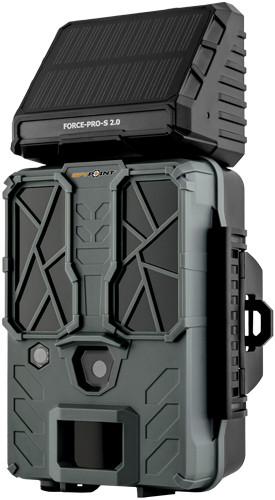
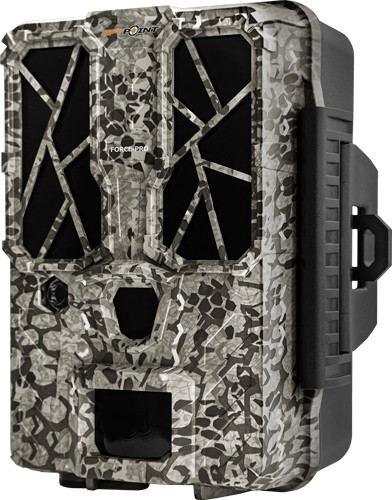
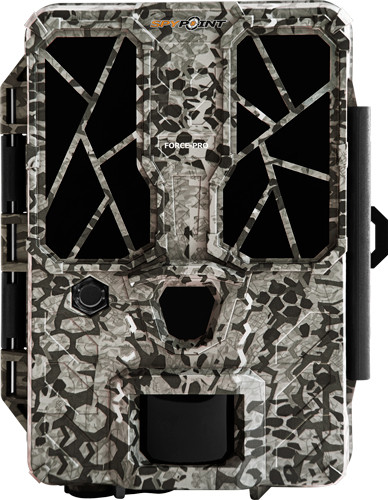
Six cameras from Spypoint and Stealth Cam. Prices are from our product pages and specs are from the manufacturers, checked September 29, 2026.
Side by side
Where a manufacturer does not publish a spec, the table says "Not listed" rather than guessing.
| Camera | Price | Photo | Video | Trigger | Detection | Flash | In the box |
|---|---|---|---|---|---|---|---|
| Stealth Cam GMAX32 | $78.99 | 32MP | 1080p | Not listed | Not listed | Red glow IR | Not listed |
| Stealth Cam QS20 | $69.99 | 20MP | 720p | 0.8 sec | 80 ft | Low glow IR, 18 LEDs | Not listed |
| Stealth Cam QS20 No-Glo Kit | $94.99 | 20MP | 720p | Not listed | Not listed | No glow | Batteries + SD card |
| Spypoint Force-Pro-S 2.0 | $149.99 | Not listed | 4K with sound | Under 0.25 sec | Not listed | 54 LEDs, 90 ft | 32GB SD card |
| Spypoint Force-Pro | $159.99 | 30MP | 4K | 0.2 sec | 110 ft | Not listed | 16GB SD card |
| Spypoint Force-Pro-S | $199.99 | 30MP | 4K | 0.2 sec | 110 ft | Low glow, 90 ft | 16GB SD card |
What hunters actually ask about these
These are the questions that come up over and over in hunting forums and trail camera threads. Straight answers, including where the honest answer is "it depends".
Do I actually need a cell camera?
Only if the intel has to reach you the same day, or the property is far enough away that checking cards costs you a tank of fuel. On ground you walk anyway, an SD card camera tells you the same story a week later for no monthly cost.
Will pulling cards spook the deer I am trying to pattern?
It can, which is the honest tradeoff. Pull cards at midday, go in and out the same way every time, and treat a camera check like a hunt. Cameras on field edges and access trails can be checked more freely than one sitting over a bedding area.
Is no glow worth the extra money?
On pressured public ground or a spot you have already burned once, yes. Some deer clock the faint red wink of a low-glow flash and quit using that trail. On a food plot on private ground where deer are relaxed, standard infrared is fine and you keep the money.
How many cameras should I run?
More cheap cameras beat one expensive one for finding deer. Once you know where they are, a faster, better camera on that one spot earns its price. That is why a pair of budget bodies and one solar Force-Pro-S 2.0 both make sense on this page, just at different stages.
What size SD card do these take?
Check the manual for the maximum before you buy one. Plenty of cameras in this class top out at 32GB, and an oversized card is a common reason a camera quits writing. The Force-Pro ships with a 16GB card and the Force-Pro-S 2.0 with a 32GB card, so those two are ready out of the box. The trail camera SD card guide covers speed class and formatting.
What else ends up on the tree
The camera is half of it. A mount that holds its angle when the wind moves the tree is most of the other half.

Batteries, solar panels and more mounts are on the trail camera accessories page. If you decide cellular fits your ground better, every model we carry is on the game cameras page.
Common questions
What is a non cellular trail camera?
A non cellular trail camera stores photos and video on an SD card inside the camera instead of sending them to your phone over a cell network. You retrieve images by swapping the card at the tree. Because there is no network involved, there is no data plan, no activation, and no monthly bill for as long as you own it.
What is the best non cellular trail camera?
For most hunters it is the Spypoint Force-Pro-S 2.0 at $149.99. The built-in solar panel keeps its internal battery charged, eight AAs act as backup, and it records 4K video with sound. If you are covering ground on a budget, the Stealth Cam GMAX32 at $78.99 shoots 32MP stills and 1080p video for about half the price.
Are non cellular trail cameras cheaper than cellular?
The camera itself is often similar in price. The difference is what happens after you buy it. A cellular camera needs a data plan for each camera, every month, for as long as it is on the tree. An SD card camera has no recurring cost at all.
Do non cellular trail cameras need wifi?
No. They need nothing but batteries and an SD card. That is also why they work in the places cell cameras struggle, like river bottoms, deep timber, and back corners with no signal.
How long do the batteries last?
The Stealth Cam models run on eight AAs and will usually go a season on a set, less if they shoot a lot of video or sit on a busy trail. The Force-Pro-S and Force-Pro-S 2.0 charge an internal lithium battery from a built-in solar panel, and the 2.0 also takes eight AAs as backup. Lithium AAs last considerably longer in cold weather than alkalines.