
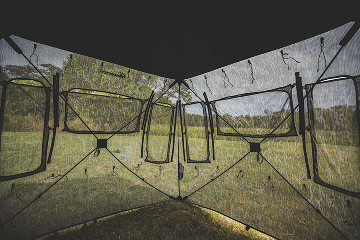

How to Set Up, Brush In and Fold a Ground Blind
A hub-style ground blind opens in seconds, brushes in with cover from the site, and folds back into its bag once you know the move. Here is the whole routine, from first setup to that dreaded fold, for both hub blinds and spring-steel pop-up ground blinds.
TL;DR
- Set up: pull the blind from the bag, let it open, then push each hub outward until it locks. Stake every corner.
- Brush in: back it into cover and weave in limbs and grass from the site. Break up the roofline and corners, keep your shooting windows clear.
- Place it: downwind of the trail or food source, sun at your back, at a distance that fits your weapon. Set it out a couple of weeks early if you can.
- Fold a hub blind: pop each hub back in, gather the poles together like an umbrella, strap it, bag it.
- Fold a spring-steel pop-up: collapse it into a taco, stand it on end, pin the bottom with your foot and twist the top down into three overlapping circles.
- If the fold fights you: you are working against the frame. Release the hubs fully, or reverse the twist direction.
How to Set Up a Ground Blind
Most ground blinds sold today come in two builds. A hub blind uses fiberglass poles joined by hubs on each wall and the roof. A spring-steel pop-up uses a coiled steel frame that springs open on its own. Setup is nearly the same for both, and the frame does most of the work. Clear a flat spot first, then work through these steps.
- 1Pull it from the bag in the open. Slide the blind out and give it room. Loosen the strap and step back, because a pop-up frame wants to spring open.
- 2Spread the walls. A spring-steel blind unfolds into a rough box on its own. A hub blind opens like an umbrella: pull the walls outward until the shape appears, roof facing up.
- 3Push each hub out until it locks. Grab the loop or strap at the center of each wall and the roof and pull it outward until the hub snaps past center and holds. That lock is what makes the walls stand tall and tight. Spring-steel pop-ups skip this step.
- 4Stand it up and stake the corners. Set the blind upright and drive a stake through each corner loop so it cannot shift or lift in the wind.
A low-profile hub blind like the ALPS OutdoorZ Deception is up and locked in a minute or two once you have done it a few times. Do a practice run in the yard before you trust it in the dark on opening morning.
How to Brush In a Ground Blind
A bare blind reads as a black box to a whitetail. Brushing in breaks up that square outline so the blind blends into the cover behind it. The best way to brush in a ground blind is to use what is already growing on the spot, so the cover matches perfectly. This is the single biggest thing you can do to keep deer from staring it down.
- Back it into cover. Set the blind against a treeline, cedar, fencerow, or brush pile so it has a backdrop instead of standing alone against the sky.
- Use the brush loops. Most blinds have loops or straps sewn on for exactly this. Weave in limbs, grass, and leafy branches cut from the site so the cover matches the surroundings.
- Break the roofline and corners. Those hard straight edges are what a deer clocks first. Drape cover over the top edge and the vertical corners to soften them.
- Keep shooting lanes clear. Brush the blind, not your windows. Leave the lanes you plan to shoot through open and clean.
Set it out a couple of weeks early if you can, so deer walk past and accept it before you ever climb in. For the full breakdown on why that matters, read whether ground blinds are effective.
Where to Place Your Blind
The best-set blind in the wrong spot still goes home empty. Pick the location with the same care you give the setup.
Sit downwind of where you expect deer to travel, and keep the sun at your back so it does not light up the inside of the blind or blind you at the shot. Range the field edges and trails you can cover, and set the blind at a distance that fits your weapon. Point your main shooting windows at the trail, food source, or funnel you are watching, and keep the door on the side you can slip in and out of without skylining yourself. A blind is not scent-proof, so the wind still runs the show. For how far a deer can wind you, see whether deer can smell you.
Placing a ground blind for bow hunting
Bow range shrinks every decision. Set the blind closer to the trail than you would for a rifle, and check that you can draw fully while seated without your limbs touching the roof or walls. Open only the windows you will shoot through, and keep the back of the blind closed so the interior stays dark and your silhouette disappears.
Placing a ground blind for turkeys
Turkeys do not need weeks to accept a blind the way deer do, so you can set one the same morning. A low-profile blind paired with a low seat keeps your shooting windows at a turkey's eye level, and the dark interior hides the movement that usually gives a hunter away.
How to Fold a Ground Blind Back Down
This is the step that turns grown hunters red in the face. The blind that opened in seconds refuses to go back in the bag. The secret is that you fold with the frame, not against it, and the move depends on which build you own.
Folding a hub blind
- 1Release every hub. Push the center of each wall and roof hub back inward until it pops through center and goes slack. Do the roof last.
- 2Collapse it like an umbrella. With the hubs released, the walls fold toward the middle. Gather the pole sections together so they run parallel.
- 3Strap and bag it. Wrap the strap around the bundle, cinch it, and slide it into the carry bag.
Folding a spring-steel pop-up blind
- 1Lay it flat and fold it in half. Bring two opposite walls together so the blind collapses into a flat taco shape on the ground.
- 2Stand the taco on one end. Set it upright like a giant slice, hold the top with both hands, and put a foot on the bottom edge to pin it.
- 3Twist the top down toward you. Roll your wrists so the top folds down and inward while the bottom stays pinned. The frame wants to collapse into three overlapping circles. Let it, do not force it against the spring.
- 4Cinch and bag it. Once it is a flat coil of three circles, hold it together, slide the strap around it, and drop it in the carry bag.
If a pop-up frame fights you, you are usually twisting the wrong direction. Reverse the roll and it will fold with almost no effort. If a hub blind will not collapse, one hub is still locked. Find it and push it through.
Keeping It Waterproof and Anchored
Most quality ground blinds ship with a water-resistant coated shell that shrugs off a normal rain. What fails first is the roof seams and the anchoring, so a little prep keeps you dry and keeps the blind on the ground.
- Stake every corner, always. Even on a calm day, wind comes up. Corner stakes and, on exposed ground, a set of tie-downs keep a gust from folding the blind or lifting it off you.
- Treat the seams. A seam sealer or spray-on water repellent on the roof and seams tops up the factory coating and heads off drips over a long wet sit.
- Dry it before you store it. Pack a soaked blind wet and you invite mildew. Pop it up at home, let it dry, then fold and bag it.
- Plan for the cold. A blind blocks wind but holds little heat on its own. For late-season sits, dress for the temperature and bring a seat that keeps you off the frozen ground.
Choosing an Easy-Setup Ground Blind
Every ground blind sets up the same basic way, but a few features decide whether it is easy to live with in the field.
- Hub or spring steel. Hub blinds stand stiffer and quieter in the wind. Spring-steel pop-ups open faster and pack flatter. Both fold in seconds once you know the move above.
- Weight and carry bag. If you walk in, a blind under about 15 lb with a shoulder-strap bag is the difference between hunting a new spot and not bothering.
- Window system. Track-style windows let you open a shooting port exactly where the deer show up, quietly. Fixed windows limit you to the angles you guessed when you set it.
- Footprint. A one-man blind is lighter and easier to hide. Bow hunters and two-person setups need more width and roof height to draw.
- Stakes and tie-downs included. You will need them every sit. Better that they come in the box.
ALPS OutdoorZ Deception - Bottomland, $199.99
A low-profile hub blind built for moving fast. Four aluminum hubs on flexible fiberglass poles, a 270 degree SILENT-Trac window system you can open anywhere around the blind, an extra-large door with an oversized #10 zipper, and two interior gear pockets. It weighs 8 lb with a shoulder-strap carry bag, and stakes with tie-downs come in the box. The small footprint suits one hunter on a low seat, for deer or turkeys.
Shop the Deception Blind →Price checked October 6, 2026. Browse every option on our pop-up ground blinds page, or see the full lineup of hunting blinds and blind accessories.
Frequently Asked Questions
Ready to Pop One Up This Season
Double D Hunting carries ground blinds that set up in a minute, brush in clean, and fold back into the bag once you know the move. Pick your blind and get it out in the field early.
Shop Ground Blinds Shop All Blinds