How to Hog-Proof a Deer Feeder
There is one near-bulletproof method and several useful supporting ones. Start with the fence, because it is the only approach that reliably stops a determined sounder. Then layer on the rest based on your feeder and your budget.
Fence It (the only near-bulletproof fix)
Ringing the feeder with a fence is the single most effective thing you can do. It works because deer, turkeys, and other wildlife step over or work around a low panel, while a feral hog simply cannot get through stout hog wire. Build it like this:
- Use hog panel or hog wire on T-posts. Go 3 feet minimum, 4 feet preferred. That height is low enough for deer to negotiate but high and stout enough that pigs cannot push over it.
- Make the enclosure about 40 feet across with the feeder centered. That gives deer plenty of room to feed inside the ring without feeling boxed in.
- Set posts no more than about 8 feet apart. Closer spacing keeps a hog from bowing a section loose with its weight.
- Add a small gate so you can get in to refill without fighting the panel every time.
The key point: a fence is the only near-bulletproof fix. Everything else on this page is partial. Cages, height, tube feeders, and timers all reduce the damage, but a determined sounder will eventually beat them. If hogs are a real problem on your property, fence the site and treat the rest as backup.
Cage the Base
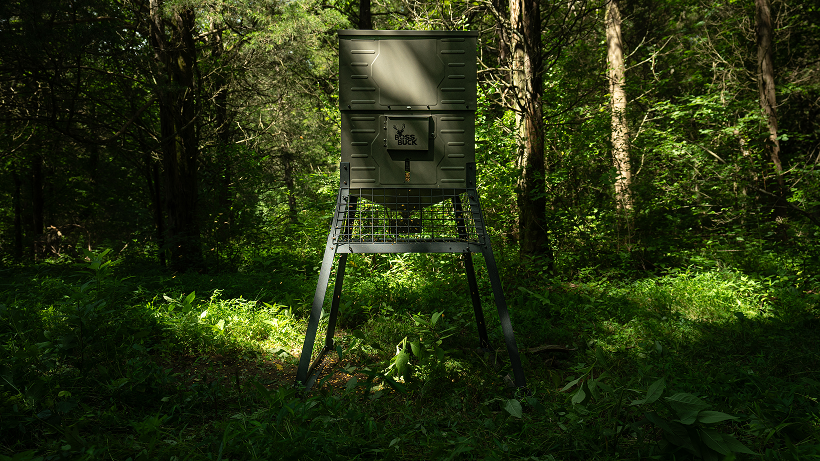
A steel cage or panel guard around the bottom of the feeder lets a deer reach through or over to the feed while blocking the bulkier hog from reaching it, or from knocking the unit loose. It is a good option where a full fence is impractical, and it pairs well with elevation. On its own a cage slows hogs down rather than stopping them cold, so think of it as a layer, not the whole answer.
Elevate and Brace the Legs
Raising the feeder so the feed and spinner sit out of a hog's reach takes away the easy meal, and bracing the legs with T-posts stops a sounder from rubbing or shouldering the unit over. Hogs are heavy and persistent, and an unbraced tripod is an easy target. For the exact numbers on how high to go, see how high a deer feeder should be, and pair the height with a fence, because height alone is not bulletproof against rooting and bullying.
Tube or "Pig-Pipe" Exclusion Feeders
Tube-style exclusion feeders are designed so deer can reach the feed but hogs cannot. The feed sits down a pipe or behind a baffle at a height and angle that a pig's body simply cannot work. They are a clever, lower-effort alternative to a full fence on smaller setups, though like everything short of a fence they manage the problem rather than eliminate it for a large, determined sounder.
Run a Timed Feeder
A timed spin feeder only drops feed at set times instead of leaving it on the ground around the clock like a gravity feeder. That shrinks the window hogs have to monopolize the site and cuts the amount of standing feed they can clean up. It is a worthwhile supplement, but on its own it is less effective than fencing, because a determined sounder will still show up at feed time and root the ground. Dial in the schedule using our deer feeder timer settings guide, and remember the same height and exclusion ideas that stop hogs also stop the raccoons climbing your feeder.
Will a Hog Trap Next to a Deer Feeder Scare the Deer?
It can, but mostly because of the trapping work rather than the trap itself. A corral or box trap that stands in place for a while tends to become part of the scenery. What deer notice is the disturbance: you building it, checking it, and dealing with a caught sounder. A few habits keep that to a minimum:
- Set the trap off to the side. Give it its own bait and some distance from the feeder, so the deer feed site and the trap site are not the same spot.
- Pre-bait with the gate tied open. Let hogs get comfortable walking in and out for several days before you set it, and let the deer get used to it standing there.
- Watch it on camera. A trail camera on the trap tells you when the sounder is coming in, without a walk-in every morning.
- Trap around your hunting. Do the heavy trapping work before season or on days you are not hunting that stand.
Deer can wander into corral traps too, so check your state and county rules on trap types and releasing non-target animals before you start.
Confirm the Problem, Then Consider Removal
Before you build anything, confirm you actually have hogs and not a different culprit. A trail camera on the site will tell you what is hitting the feeder and when. Because hogs are so destructive and proliferate so quickly, many landowners pair exclusion fencing with active trapping and removal: exclusion protects the feed, removal addresses the herd. Check your state and county regulations before you trap or remove feral hogs.