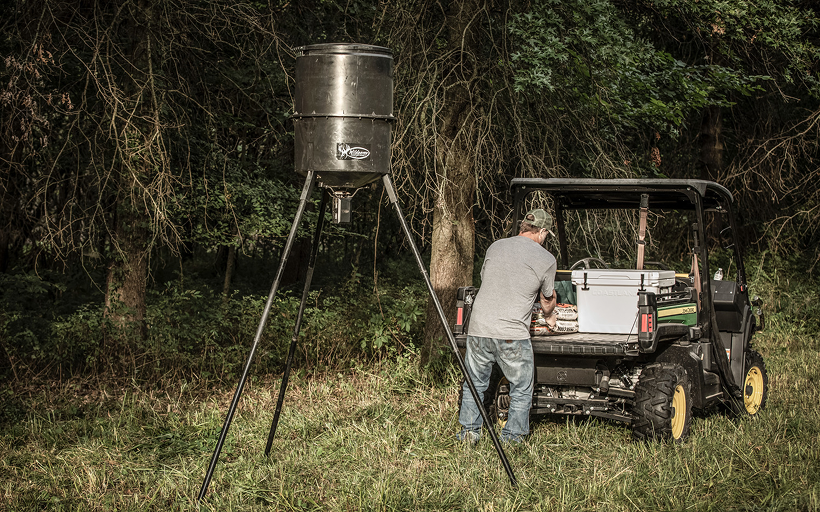
Dialing In the Right Feeder Height
Start with the default, then adjust up for the animals in your area and down only for the one case (fawns) where lower is the point. Here is the full breakdown.
How High to Hang a Deer Feeder: 6 to 7 Feet
For a hanging or barrel spin feeder, set the bottom of the feeder about 6 to 7 feet off the ground. The broader workable range people run is roughly 5 to 7 feet. That is high enough that deer feed comfortably underneath it (and reach the scattered corn a spin feeder throws onto the ground) while still being high enough to deny the climbers and reachers that would otherwise empty it.
Below five feet and you are inviting raccoons, hogs, and the occasional ambitious goat-of-a-deer to get into the hardware. Much above seven and you make refilling a chore without buying yourself much. Six to seven is the sweet spot that most hunters land on for a reason.
The key point: 6 to 7 feet is the default for a hanging or barrel feeder. The only times you change it: go higher (8 to 10 ft or more) where bears are present, and go lower (a ~24 in trough) only when you are deliberately feeding fawns.
Recommended Height by Feeder Type and Situation
Match the height to what you are running and what you are up against:
| Feeder type / situation |
Recommended height |
| Hanging / barrel feeder (standard) |
Bottom 6 to 7 ft off the ground (5 to 7 ft workable range) |
| Bear country |
8 to 10 ft or higher, plus an electric fence or bear-resistant setup |
| Gravity feeder |
Trough or port at a comfortable deer-head height, per the feeder's stand |
| Trough feeder for fawns |
Trough sides around 24 in off the ground |
Why Height Is About Critter Control
The number-one reason to put a feeder up at height is to keep the feed up and away from everything that is not a deer. Raising it out of reach blocks raccoons and squirrels from getting at the feed and helps fend off smaller predators that would otherwise treat your setup like a free buffet. Height alone will not beat a determined climber, though. A raccoon will go straight up a leg if you let it.
So pair the elevation with leg defenses. For the full playbook on shutting down climbers, see how to keep raccoons out of a deer feeder. For the heavyweights that bully a feeder rather than climb it, see how to keep hogs out of a deer feeder. There, height plus a fence is the answer.
Bear Country: Go Higher
Where bears are in the picture, 6 to 7 feet is not enough. A standing bear reaches far higher than a deer ever will and is strong enough to pull a feeder down. Set the feeder 8 to 10 feet off the ground or higher, and back it up with an electric fence or a purpose-built bear-resistant setup. Plain elevation by itself rarely keeps a bear out; the height buys you margin, and the fence does the real work.
How High Should a Gravity Feeder Be Off the Ground?
Lower than a spin feeder, because the job is different. A spin feeder sits high and throws corn to the ground. A gravity feeder does not throw anything, so its trough or port has to sit where a deer can comfortably put its head in and eat. Set it at the height the feeder's legs or stand are built for, and if fawns are part of the herd, keep the trough around 24 inches, as covered below.
The trade-off is that a gravity feeder leaves feed out around the clock, so height is not doing much critter control for you. Lean on leg defenses, a base cage or a fence instead, and see keeping raccoons out and keeping hogs out for the details.
The Trough Exception: Feeding Fawns
Everything above assumes a spin or barrel feeder that you want up high. A trough-style feeder built to let fawns reach it is the opposite goal. For that, keep the trough sides around 24 inches off the ground so the smallest deer can still get their heads in. This is a deliberate, different setup, not a spin feeder hung low. Know which job you are doing before you set the height.
Height Also Cuts Wasted Feed
Beyond the critter math, raising the feeder keeps your corn cleaner and your bill lower. A feeder set at a sensible height reduces feed blown or washed onto the ground and keeps what is in the hopper drier, which also means fewer jams from damp, clumped corn. Cleaner, drier feed holds deer better and keeps the spinner turning the way it should.
Setting Height on Real, Uneven Ground
Out in the woods nothing is flat. On a slope, measure the height to where the deer will actually stand, not where you happen to be holding the tape. A feeder that is seven feet up on the downhill side can be four feet up on the uphill side, which is right where a hog wants it. Set it relative to the deer's footing.
Practical ways to get and hold the height you want:
- Run a tripod feeder. Its legs give you a fixed, stable elevation without hunting for the perfect limb.
- Hang higher with a winch or pulley. A simple cable-and-pulley setup lets you raise a heavy hanging feeder to height and lower it to refill without a ladder fight.
- Use taller legs or extensions. Taller leg sections (or a sturdier platform) lift a standing feeder up where you need it.